

por Yasmín Rojas
En las calles gélidas de Minneapolis, las personas ya no caminan únicamente para llegar al trabajo o ir de compras. Ahora caminan para observar, para grabar, para impedir que alguien desaparezca sin testigos. Los conocemos con el nombre de “ice Watchers”, y han transformado el mirar en un acto de defensa y justicia. Con el cuello cubierto por bufandas, con los ojos bien despiertos, se colocan en las aceras, frente a los edificios donde se cree que el ice actúa. No están armados, cargan consigo sus teléfonos y el objetivo de no permitir que nadie más muera sin que el mundo se entere.
El estado de Minnesota es un estado azul (demócrata), es decir, un estado liberal y con uno de los niveles de educación más altos en el país. Los republicanos, guiados por Trump, han estado enviando a más agentes de ice a las ciudades más azules como Los Ángeles, San Francisco, San Diego, Chicago, etc. La ciudad de Minneapolis, pues, no es ajena a las agresiones de estos agentes. De ahí que cientos de personas no duden en apoyar y obstruir las operaciones del ice. A partir de los asesinatos de la poeta Rennee Good y el enfermero Alex Pretti, los “ice watchers’ han incrementado sus actividades.
Aplaudo ésto, no obstante, me duele pensar que ese mismo gesto de cuidar y defender a los migrantes de las garras del ice no alcanzó a tantos otros. Pienso en Geraldo Lunas Campos, asfixiado en Fort Bliss. En Luis Gustavo Núñez Cáceres, cuyos latidos se detuvieron lejos de su tierra, sin que se le nombrara en las noticias. En Víctor Manuel Díaz, a quien declararon “suicida”. En Santos Reyes Bánegas quien murió en custodia de ice y le atribuyeron la causa a “problemas de alcohol”. En Isidro Pérez que falleció bajo la custodia de ice en Florida debido a un “ataque al corazón”. Sus nombres no aparecieron en los titulares más importantes. Sus muertes se archivaron bajo: “condición médica” o “caso cerrado”. El silencio es otra forma de desaparecernos.
Hay que escribir para que los nombres que no fueron gritados también tengan un lugar en la página. Para que los que murieron alejados de sus familias sean rodeados de palabras que se vuelven abrazos. Para que el gesto de mirar sea un ritual de cuidado antes de que venga la muerte.
En Minneapolis, también fueron asesinados quienes intentaban proteger a otros. Good fue asesinada por un agente de ICE mientras regresaba de dejar a su hijo en la escuela. Pretti murió a manos de los disparos de dos agentes de la patrulla fronteriza. Ahora sabemos sus nombres, Jesús Ochoa y Raymundo Gutiérrez, ambos de origen hispano.
Para muchos de nosotros, saber que quienes matan también hablan nuestra lengua, llevan apellidos parecidos a los nuestros, deja una herida distinta, como una doble traición. El odio se duplica contra ellos y, tristemente, contra nosotros. No por lo que hicimos, sino porque el odio encuentra fácil repetir patrones, que, si un hispano dispara, entonces todos somos verdugos. Que, si un agente se apellida Gutiérrez, entonces la sospecha cae sobre cada Gutiérrez que cruza la frontera o pide asilo.
Pero no podemos permitirnos odiarnos más entre nosotros. Esa es la trampa de aquellos en el poder. Los agentes hispanos no actuaron por su lengua ni por su historia familiar. Actuaron como lo que son, engranajes de una institución brutal que opera sin ver a quien lastima. Hay que mirar a la estructura que corrompe, que asimila, que devora cuerpos y los vuelve arma. Si la culpa cae sobre nosotros doblemente, esa es la intención del poder.
Así pues, si vamos a observar, que sea sin odio, el odio es lo que les guía a ellos. Si vamos a nombrar, que sea con justicia. Si hay que enfrentar la violencia de una máquina que dispara sin discernir, entonces que lo hagamos unidos, con compasión, con la mirada clara de que el enemigo no es el otro que se nos parece, sino la fuerza que lo empuja a olvidar de dónde vino.
Por eso, cada vez que alguien enciende su cámara al ver una camioneta del ice, cada vez que alguien apunta el número de placa de un agente, cada vez que alguien sopla el silbato para avisar a sus vecinos la proximidad de los agentes, se está haciendo justicia. La única respuesta es estar presentes, testimoniar, mirar sin parpadear, grabar y nombrar a los ausentes.
Pero hagámoslo con cuidado por favor.
*
BEFORE DEATH COMES FOR US
by Yasmín Rojas
On the freezing streets of Minneapolis, people no longer walk solely to get to work or go shopping. Now they walk to observe, to record, to prevent someone from disappearing without witnesses. We know them as “ice Watchers,” and they have turned looking into an act of defense and justice. With their necks wrapped in scarves, eyes wide open, they position themselves on sidewalks, in front of buildings where ice is believed to operate. They are not armed; they carry their phones and the resolve to ensure that no one else dies without the world knowing.
The state of Minnesota is a blue (Democratic) state, that is, a liberal state with one of the highest levels of education in the country. Republicans, guided by Trump, have been sending more ICE agents to the bluest cities, such as Los Angeles, San Francisco, San Diego, Chicago, and others. The city of Minneapolis, then, is no stranger to the aggressions of these agents. Hence, hundreds of people do not hesitate to support and obstruct ICE operations. Since the murders of poet Rennee Good and nurse Alex Pretti, ICE Watchers have intensified their activities.
I applaud this. Nevertheless, it pains me to think that this same gesture of caring for and defending migrants from the claws of ice did not reach so many others. I think of Geraldo Lunas Campos, suffocated at Fort Bliss. Of Luis Gustavo Núñez Cáceres, whose heart stopped far from his homeland, without his name ever appearing in the news. Of Víctor Manuel Díaz, who was declared a “suicide.” Of Santos Reyes Bánegas, who died in ICE custody and whose death was attributed to “alcohol-related problems.” Of Isidro Pérez, who died under ICE custody in Florida due to a “heart attack.” Their names did not appear in the major headlines. Their deaths were filed under “medical condition” or “case closed.” Silence is another way of making us disappear.
We must write so that the names that were not shouted also have a place on the page. So that those who died far from their families may be surrounded by words that become embraces. So that the act of looking becomes a ritual of care before death arrives.
In Minneapolis, those who tried to protect others were also killed. Good was murdered by an ice agent while returning from dropping her son off at school. Pretti was killed by gunfire from two Border Patrol agents. Now we know their names: Jesús Ochoa and Raymundo Gutiérrez, both of Hispanic origin.
For many of us, knowing that those who kill also speak our language, carry surnames similar to ours, opens a different kind of wound, a double betrayal. Hatred doubles against them and, tragically, against us. Not for what we did, but because hatred easily repeats patterns: if a Hispanic man fires a gun, then we are all executioners; if an agent’s last name is Gutiérrez, suspicion falls on every Gutiérrez who crosses the border or seeks asylum.
But we cannot afford to hate one another more. That is the trap set by those in power. Hispanic agents did not act because of their language or their family history. They acted as what they are: cogs in a brutal institution that operates without seeing whom it harms. We must look at the structure that corrupts, that assimilates, that devours bodies and turns them into weapons. If blame falls doubly on us, that is precisely the intention of power.
So, if we are going to observe, let it be without hatred, hatred is what guides them. If we are going to name, let it be with justice. If we must confront the violence of a machine that shoots without discernment, then let us do so united, with compassion, with the clear-eyed understanding that the enemy is not the one who resembles us, but the force that pushes them to forget where they came from.
That is why, every time someone turns on their camera upon seeing an ICE van, every time someone writes down an agent’s license plate number, every time someone blows a whistle to warn their neighbors of the agents’ proximity, justice is being done. The only response is to be present: to bear witness, to look without blinking, to record, and to name the absent.
But please, let us do so with care.
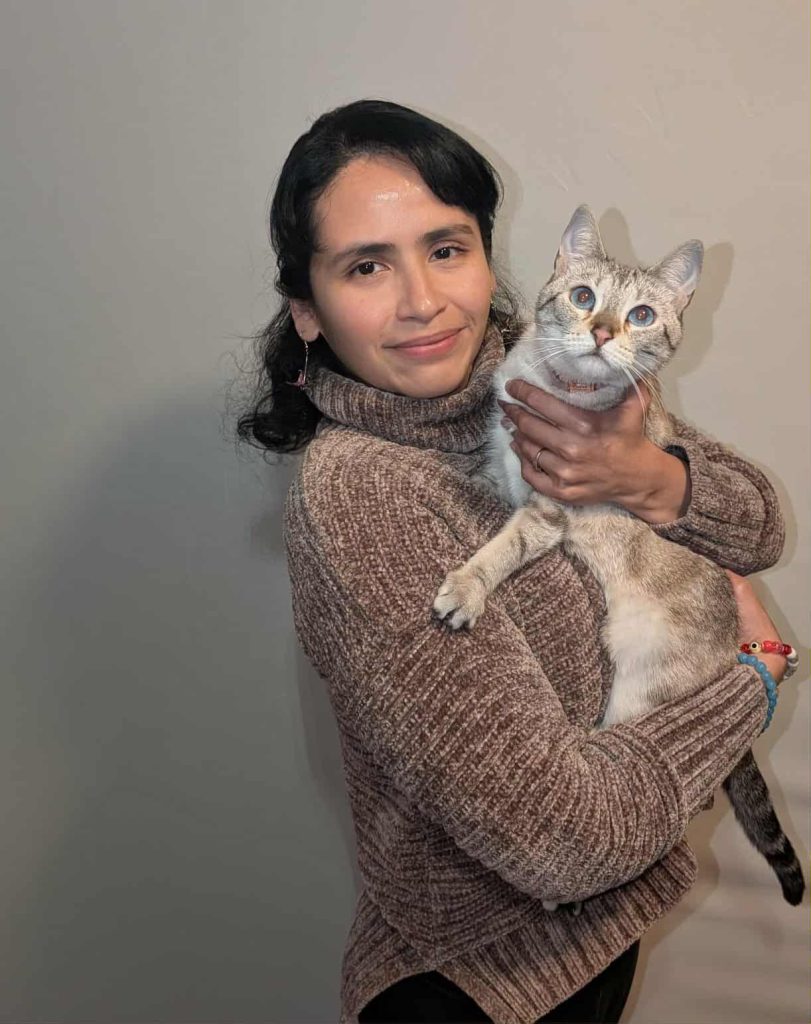
Yasmín es co-editora de Isotopías, sobreviviente de cáncer infantil y migrante.
Yasmín is co-editor of Isotopías, childhood cancer survivor and migrant.