

Para Dolores
ANTES del Bronx, antes de las agujas y las camas de hospital, antes de que cinco hijos aprendieran el peso de su nombre, Lolita era apenas una adolescente en Chapachapa que vestía falda de holán, andaba descalza, y traía una tormenta en la cabeza que ni el calor podía domar.
Ya desde entonces inauguraba el sol y los atardeceres. Su cabello era salvaje. No las ondas blancas que más tarde miraríamos secarse desde las sillas del hospital, no el mar que encontraríamos en él cuando necesitábamos dónde descansar los ojos. Era indómito, rizado, oscuro, algo que no sabía que era hermoso.
Los sábados por la noche las fiestas empezaban cuando el sol caía detrás de los cerros y el arpa comenzaba a arrancar del aire algo antiguo. Detrás de Lolita bailaban muchos horizontes mientras ella se movía al ritmo del son jarocho. Quizás sin gracia, apenas estaba aprendiendo. Bailaba como baila la tierra cuando por fin llueve, agradecida, libre. Sus caderas le respondían a la jarana, sus pies descalzos golpeaban la tarima y el sonido se tornaba risa. Todos en la comunidad la miraban, el tamarindo en el patio la miraba. Pero ella no se daba cuenta de ninguno de ellos. La música ya se la había llevado a un lugar donde nadie podía seguirla.
Sus labios le sonreían a una inmensidad inconcebible, dejando escapar sus alegrías tras la vasta brillantez de sus campos. Sonreía a la bugambilia, a los perros dormidos bajo el árbol de mango, a los niños persiguiéndose entre el polvo. Sonreía a las gallinas, a la lluvia bienhechora, a la nada. Su sonrisa era la condición natural de una mujer a la que todavía no le habían dado una razón para dejar de hacerlo.
Los domingos caminaba sola con la brisa sobre el rostro hasta donde la tierra se rendía al agua. Las otras muchachas permanecían cerca de la orilla, con los tobillos en la espuma, gritando cuando las olas empujaban demasiado fuerte. Lolita no. Ella nadaba lejos. Más allá de donde el agua cambiaba de color. Más allá de donde las olas tenían nombre. Más allá del lugar donde los pescadores decían que la corriente se pone egoísta y ya no te devuelve. No le importaba. No estaba nadando lejos de nada. Nadaba hacia la parte de sí misma que solo existía en el agua profunda, en la sal, en el permiso infinito del mar abierto. No había enfermedad esperándola allá afuera. No había ciudad de hierro. No había frío. No había agujas. Solo su cuerpo haciendo aquello para lo que fue hecho: moverse, respirar, estar viva y libre.
Volvía siempre. El cabello empapado, con sal y arena blanca, la piel tornasolada por el sol, las piernas cansadas, los pulmones llenos. Caminaba a casa por las calles que se enfriaban y el aire olía a leña y cilantro y al último calor del día abandonando las piedras. No nos conocía todavía. No sabía del Bronx, de los cinco hijos que necesitarían que ella fuera más fuerte que cualquier océano que hubiera cruzado a nado. No sabía que el mismo cuerpo que lanzaba sin miedo contra las olas sería un día el que conversaría con las agujas, el que se tragarían las batas del hospital, el que se encogiería y se secaría y la traicionaría mientras sus hijos miraban.
Pero ya estábamos ahí. Nadando en algún lugar del valiente y tierno país de su sangre, esperando nacer dentro de una mujer que ya había practicado, cada domingo, el arte de llegar más lejos de lo que cualquiera pensó que debía.
*
LOLITA BEFORE US
For Dolores
BEFORE the Bronx, before the needles and the hospital beds, before five children learned the weight of her name, Lolita was barely a teenager in Chapachapa who wore ruffled skirts, walked barefoot, and carried a storm in her head that not even the heat could tame.
Already then she was inaugurating the sun and the sunsets. Her hair was wild. Not the brown waves we would later watch dry from the hospital chairs, not the sea we would find in it when we needed somewhere to rest our eyes. It was untamed, curly, dark, something that didn’t know it was beautiful.
On Saturday nights the fiestas began when the sun fell behind the hills and the harp started pulling something ancient from the air. Many horizons danced behind Lolita while she moved to the rhythm of son jarocho. Perhaps without grace, she was barely learning. She danced the way the earth dances when it finally rains — grateful, free. Her hips answered the jarana, her bare feet struck the tarima and the sound became laughter. Everyone in the community watched her, the tamarind tree in the courtyard watched her. But she didn’t notice any of them. The music had already carried her to a place where no one could follow.
Her lips smiled at an inconceivable immensity, letting her joys escape into the vast brilliance of her fields. She smiled at the bougainvillea, at the dogs sleeping under the mango tree, at the children chasing each other through the dust. She smiled at the chickens, at the benevolent rain, at nothing at all. Her smile was the natural condition of a woman who had not yet been given a reason to stop.
On Sundays she walked alone with the breeze on her face to where the land surrendered to the water. The other girls stayed close to shore, ankles in the foam, screaming when the waves pushed too hard. Not Lolita. She swam far. Past where the water changed color. Past where the waves had names. Past the place where the fishermen said the current turns selfish and doesn’t give you back. She didn’t care. She wasn’t swimming away from anything. She was swimming toward the part of herself that only existed in deep water, in salt, in the endless permission of the open sea. There was no sickness waiting for her out there. No iron city. No cold. No needles. Only her body doing what it was made for: moving, breathing, being alive and free.
She always came back. Hair soaked, with white salt and sand, skin iridescent from the sun, legs tired, lungs full. She walked home through the cooling streets and the air smelled of woodsmoke and cilantro and the last warmth of the day leaving the stones. She didn’t know us yet. She didn’t know about the Bronx, about the five children who would need her to be stronger than any ocean she had ever swum across. She didn’t know that the same body she threw fearlessly against the waves would one day be the one that conversed with the needles, the one the hospital gowns swallowed, the one that would shrink and dry and betray her while her children watched.
But we were already there. Swimming somewhere in the brave and tender country of her blood, waiting to be born inside a woman who had already practiced, every Sunday, the art of going further than anyone thought she should.
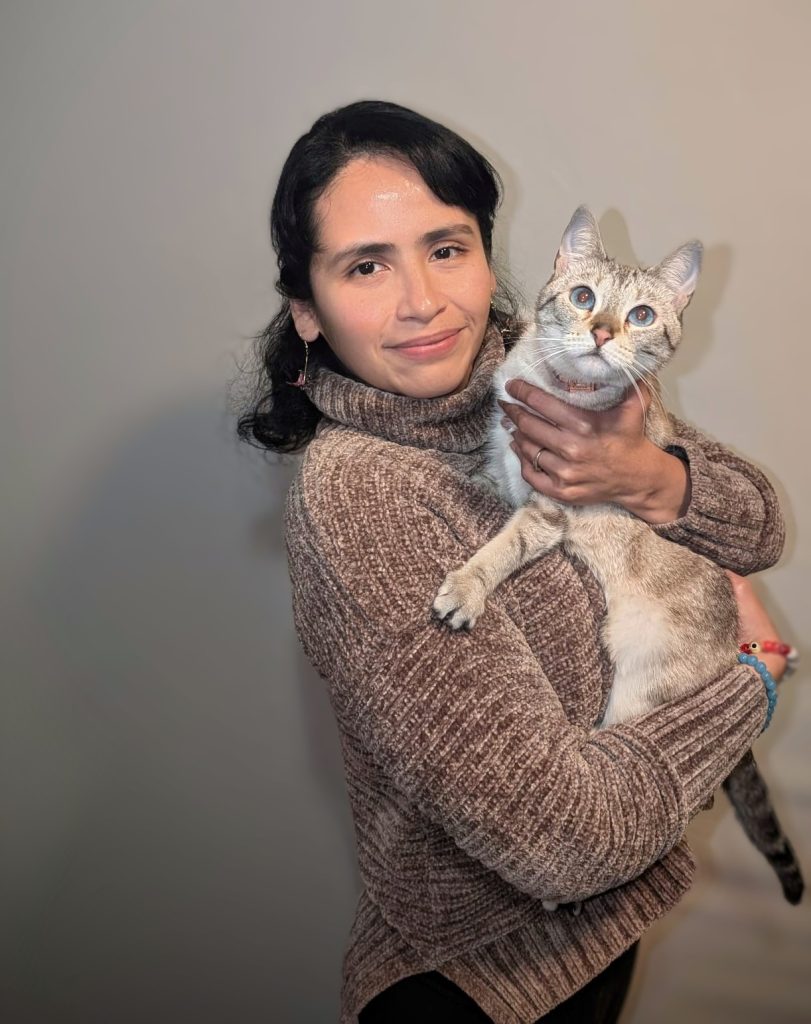
Yasmín Rojas is a Latinamerican Literature doctorate candidate at the University of Veracruz. She has published essays in Literal Latin American Voices, Latin American Literary Review, Criticismo, Caratula, and other journals. Currently, she co-directs and edits the literary and arts journal Isotopías.