
*Esta columna lleva por título una frase que dijo Zbigniew Brzezinski, consejero de Seguridad Nacional del presidente Jimmy Carter, uno de los impulsores de la Operación Ciclón. Esta Operación fue un programa de la CIA para reclutar y proveer de artillería a fundamentalistas islámicos en Afganistán (también llamados muyahidines) y con el apoyo de los servicios de inteligencia de otros países (por ejemplo, de Pakistán) -de estos grupos emergen personalidades, que después el gobierno de eeuu declararía como terroristas, como Osama bin Laden). El objetivo era que lucharan contra un gobierno afgano socialista que recién emergía y frenaran el avance de la unión soviética en la región, sin que eeuu moviera directamente sus tropas, pues “para las élites de Washington las poblaciones de otros países son solo recursos para la consecución de sus intereses” (Robert Crews, historiador especializado en Afganistán). El objetivo era aplastar toda presencia de gobiernos de izquierda o comunistas (como lo hemos visto en LATAM). Brzezinski dijo estas palabras cuando le preguntaron si se arrepentía del apoyo a los yihadistas: “¿Qué es más importante en la historia universal? ¿El talibán o el colapso del imperio soviético?”
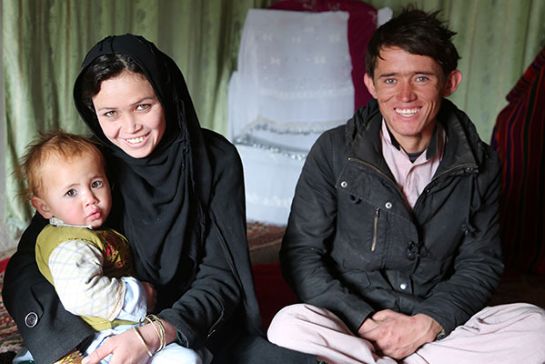
“¡Mira los aviones estadounidenses!”, exclama emocionado Mir ante las cámaras de los cineastas Grabsky y Sharifi. Mir Hussain tiene siete años y es 2001. Se le ve alegre. Vive en una cueva en ruinas junto con su familia, desde que los talibanes llegaron al poder. Las tropas estadounidenses acaban de aterrizar en Afganistán, bajo la misión general: Operación Libertad Duradera (Operation Enduring Freedom). Sí, así fue el nombre oficial empleado por el gobierno de estados unidos para la guerra de Afganistán.
20 años después dice Mir, ya de adulto, nuevamente para las cámaras de Grabsky y Sharifi: “En ese momento (cuando era niño y vio emocionado los aviones norteamericanos) creí realmente que los estadounidenses nos traerían una mejor vida, estábamos emocionados, pero no ha sido así”.
Este es un extracto de un duro, pero muy revelador documental titulado en español “Crecer en Afganistán- Dos décadas sin paz” (En inglés: “My childhood, my country – 20 years in Afghanistan”), dirigido por Phil Grabsky y Shoaib Sharifi. En él se cuenta la historia de Mir y de su familia durante 20 años (¡Dos décadas de grabación!), desde que él era un niño y experimentó la crudeza del dominio talibán, hasta el 2021, con la retirada del régimen militar estadounidense y nuevamente la llegada al poder de los talibanes. En esas décadas Mir y su familia no tienen paz, su vida no mejora y siempre la muerte, la violencia y la voluntad por la vida se tejen de maneras asombrosas (y sumamente crueles).
La sensación que queda al final del documental, con llegada al poder nuevamente de los talibanes, es de que la guerra contra el terrorismo no tuvo nunca un sentido de liberación para el pueblo afgano. Nunca trajo paz ni justicia. DW en su página para promocionar el documental dice: “Después de 20 años, una inversión de 2,3 billones de dólares de 40 países y más de 160.000 vidas perdidas, el documental plantea sobre todo un interrogante: ¿valió la pena esta guerra para Mir, para su país y para el mundo?” La respuesta es muy clara en palabras de su protagonista, Mir: no, no valió la pena.
Es una verdadera joya de documental y es muy importante verlo por todo lo que revela sobre el sinsentido de las intervenciones imperialistas para un verdadero mundo de paz y de justicia: la intervención estadounidense, que pretendía combatir el terrorismo y forjar un supuesto Estado democrático, sólo deja un país devastado, sumido en una profunda crisis humanitaria y con el retorno de los mismos grupos extremistas que buscó eliminar (y que favoreció la CIA décadas atrás en la conocida Operación Ciclón), ahora con un control territorial aún mayor.
Los objetivos de libertad y democracia jamás se cumplieron, pero la pregunta es ¿alguna vez fueron reales? Volvamos al título de esta columna. La pregunta de Brzezinski, formulada desde una frialdad geopolítica (y claramente racista y colonial) que realmente asusta, pero que es honesta (así nos piensan quiénes ostenan poder imperial y lo mejor es no olvidarlo), muestra una lógica que atraviesa toda la historia que el imperialismo es: esa historia universal no mira la vida cotidiana de millones de personas atrapadas entre decisiones tomadas por hombres que nunca han pisado sus tierras y he ahí lo imperdondable de los imperios. Tanto eeua como la extinta unión soviética paracen haber usado a los pueblos de la región de asia central sólo para frenarse y vanogloriarse de sus estrategias. Así, es la historia reciente de Afganistán una herida colonial y geopolítica abierta. Es Afganistán un territorio de sacrificio dentro de una lógica imperial. Lo es también Palestina, Siria, Sudán. No hay otra forma de actuar de los imperios ¿qué esperamos entonces en América Latina de las intervenciones de eeuu? ¿Por qué creemos que allá no es aquí, cuando aquí también la CIA ha intervenido en decisiones políticas, en la autodeterminación de los pueblos (en lo que llamaron la Operación Condor) y armado hasta los dientes a paramilitares e incluso a los narcos? ¿Qué esperamos de un presidente que hoy 3 de enero de 2026 grita sin freno alguno que “el dominio de Estados Unidos en América Latina no será cuestionado nunca más”…?
Ahora el gobierno de eeuu habla de la guerra de Afganistán como “error”, así nada más. Que hayan existido tantos atropellos a la dignidad humana en su nombre y que se haya sentido con el poder de tomar las narrativas de un país obliga a volver a plantear la pregunta de quien alguna vez fue su consejero de Seguridad Nacional, pero reformularla desde abajo y como premisa: es más importante en la historia universal la vida de quienes siempre pagan el precio de su ambición, que el destino de los imperios. Y ojalá esta premisa nos abrece siempre a los pueblos que hemos vivido la opresión imperialista.
Ante los tiempos de guerra mucha conciencia historia, mucho pensamiento crítico.
*
WHAT IS MORE IMPORTANT IN UNIVERSAL HISTORY? THE TALIBAN OR THE COLLAPSE OF THE SOVIET EMPIRE?
*This column is titled with a quote by Zbigniew Brzezinski, National Security Advisor to President Jimmy Carter, and one of the architects of “Operation Cyclone”. This operation was a CIA program to recruit and arm Islamic fundamentalists in Afghanistan (also known as mujahideen), with the support of intelligence services from other countries (such as Pakistan). From these groups emerged individuals that the U.S. government would later label as terrorists, including Osama bin Laden. The goal was to fight against a newly emerged socialist Afghan government and to halt the Soviet Union’s advance in the region, without the U.S. deploying direct troops. “For Washington elites, the populations of other countries are just resources to achieve their own interests” (Robert Crews, historian specialized in Afghanistan). The objective was to crush any presence of leftist or communist governments (as we’ve seen in LATAM). Brzezinski said these words when asked if he regretted supporting the jihadists: “What is more important in world history? The Taliban or the collapse of the Soviet empire?”
“Look at the American planes!” exclaims a joyful Mir to the cameras of filmmakers Grabsky and Sharifi. Mir Hussain is seven years old in 2001. He looks happy. He lives in a ruined cave with his family since the Taliban came to power. U.S. troops have just landed in Afghanistan under the mission “Operation Enduring Freedom”. Yes, that was the official name used by the U.S. government for the war in Afghanistan.
Twenty years later, Mir—now an adult—says again to the cameras of Grabsky and Sharifi: “At that moment (when I was a child and saw the American planes with excitement), I really believed that the Americans would bring us a better life. We were excited, but it didn’t happen.”
This is an excerpt from a powerful and revealing documentary titled “My Childhood, My Country, 20 Years in Afghanistan,” directed by Phil Grabsky and Shoaib Sharifi. The film follows the story of Mir and his family over two decades (20 years of filming!), from the time he was a child experiencing the harshness of Taliban rule to 2021, with the withdrawal of U.S. forces and the Taliban’s return to power. In those decades, Mir and his family never find peace, their lives do not improve, and death, violence, and a will to live intertwine in astonishing, and deeply cruel, ways.
The feeling left by the end of the documentary, with the Taliban once again in power, is that the war on terror never had a true purpose of liberation for the Afghan people. It brought neither peace nor justice. DW, on his page promoting the documentary, says: “After 20 years, an investment of $2.3 trillion from 40 countries, and more than 160,000 lives lost, the documentary raises above all a question: was this war worth it?, for Mir, for his country, and for the world?” The answer is clear in Mir’s own words: no, it wasn’t worth it.
It’s a real gem of a documentary and is essential viewing for everything it reveals about the senselessness of imperialist interventions in the name of a just and peaceful world. The U.S. intervention, supposedly aimed at fighting terrorism and building a democratic state, left behind only a devastated country, mired in humanitarian crisis and under the control of the very extremist groups it claimed to eliminate (and whom the CIA had empowered decades earlier under Operation Cyclone), now with even greater territorial control.
The goals of freedom and democracy were never achieved, but the question is: were they ever real? Let us return to the title of this column. Brzezinski’s question, posed with chilling geopolitical detachment (and clearly racist and colonial), is frightening in its honesty. But it reflects a logic that underpins all of imperial history: a history that does not see the daily lives of millions of people trapped by decisions made by men who’ve never set foot on their lands. That is the unforgivable nature of empires. Both the U.S. and the former Soviet Union seem to have used the people of Central Asia merely to block each other and boast of their strategies. Thus, Afghanistan’s recent history is an open colonial and geopolitical wound. Afghanistan is a territory of sacrifice within imperial logic. So too are Palestine, Syria, Sudan. Empires know no other way of acting. So what should we expect in Latin America from U.S. interventions? Why do we believe that “there” isn’t “here,” when here too the CIA has intervened in political decisions, undermined the self-determination of peoples (in what they called Operation Condor), and armed paramilitaries and even narcos to the teeth?
What should we expect from a president who, today. January 3, 2026, shouts unrestrained that “U.S. dominance in Latin America will never again be questioned”…?
Now the U.S. government refers to the war in Afghanistan simply as a “mistake.” Just like that. That so many atrocities against human dignity were committed in its name, and that it felt entitled to narrate the story of another country, forces us to reformulate the question once posed by its National Security Advisor, from the ground up, and as a premise: in world history, the lives of those who always pay the price of imperial ambition are more important than the fates of empires. May that premise always guide those of us who have lived under imperialist oppression.
In times of war: historical awareness, critical thinking.
Itzel Cabrera y Almendrita son xalapeñas de nacimiento y por convicción.
Itzel Cabrera and Almendrita are Xalapeñas by birth and by conviction.
Translated from the Spanish by Yasmin Rojas
Imagen de portada pertenece al documental My childhood, my country – 20 years in Afghanistan